
A successful campaign should improve the next one and the GTM system behind it.
Outbound replies reveal buying triggers. Sales conversations expose positioning gaps. Ad campaigns identify promising segments. Too often, those lessons stay inside one channel, one report, or one person’s head.
At Clay’s Sculpt conference in San Francisco on October 8, the company showed how it wants to connect those lessons into a revenue system that keeps improving. You can watch the Clay Sculpt Keynote Recap here.
Practitioners put that ambition to the test with better market coverage, stronger reasons to reach out, and more useful buyer interactions.
Clay is moving beyond enrichment
Clay co-founder and CEO Kareem Amin framed the shift in his keynote:
“It’s not enough to run a ton of one-off campaigns. Anyone can do that now. But what matters is that your campaigns improve with each iteration.”
Clay Audiences brings together company and contact data. Account Agents use that context to research accounts and recommend the next action. Workflows coordinate actions. Ads and Sequencer turn that work into campaigns.
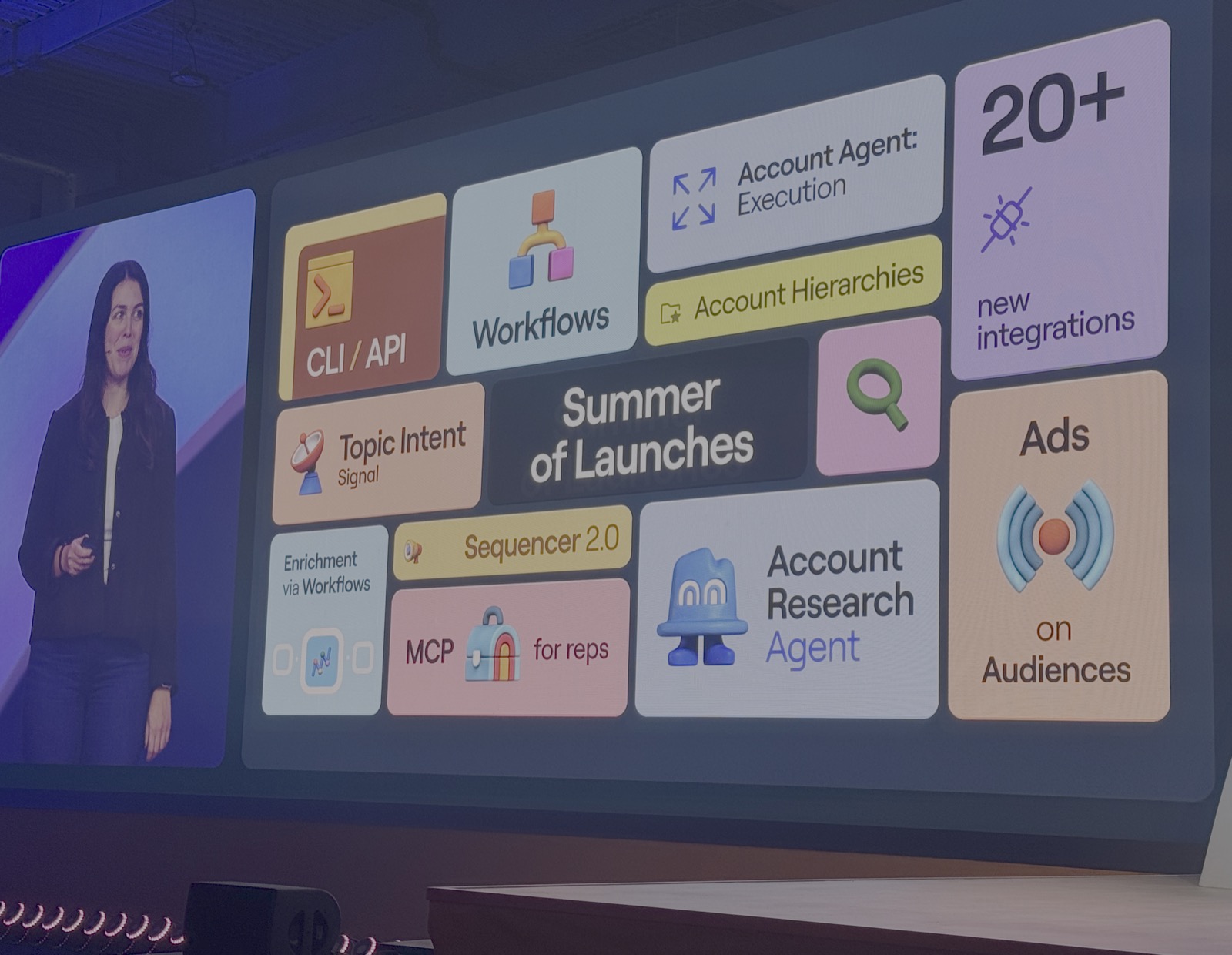
Clay demonstrated three building blocks:
- Workflows, already in beta, let operators trace each run, check decisions, and improve the logic.
- A new global agent and Knowledge Hub connect goals to execution. Knowledge Hub holds business context, including your ideal customer profile (ICP), products, and positioning. The agent uses it to build plays, review results, and recommend changes. It launched in alpha for Sculpt attendees on paid plans.
- An Inbound SDR Agent, previewed with a waitlist, would qualify prospects through conversation and demo the product in a tailored sandbox. Clay’s announcement recap
For companies with heavy inbound traffic, a conversation could uncover a valuable use case that a rigid lead score missed.
Your target market is bigger than your database filter
Growth Engine X founder Eric Nowoslawski showed how industry filters can hide good prospects. A bank appeared under construction. A school district appeared under luxury goods. Searching the seemingly correct category would miss both.
His approach starts with companies you know are good fits:
- Learn how they appear in structured databases.
- Search broadly across relevant categories, descriptions, and keywords.
- Use AI to evaluate fit and find similar companies the initial searches missed.
For cybersecurity companies, “financial services” or “software” is only the beginning. Buying conditions can include a specific technology stack, development model, regulatory exposure, or security team structure.
AI can evaluate those conditions across a larger market. Someone still needs to define a good fit and the evidence required to establish it.
You can find Eric Nowoslawski’s 31 Claude skills and 19 playbooks for cold outbound here.
Fifty enrichment columns still need a reason to reply
Blueprint founder Jordan Crawford argued that capable agents can still produce outreach buyers have little reason to answer. More data about someone does not automatically make a message useful.
His alternative is the permissionless value prop:
“It is a message that is independently valuable to the person receiving it.”
He described outreach that delivered a finding and supporting analysis before asking for a meeting. Reading the message gave the recipient some of the product’s value.
A CISO should learn something relevant before giving up time. The research must connect an observable condition to a problem your company can help solve.
AI makes research and production cheaper. Knowing which finding matters to a buyer, and how to communicate it credibly, remains hard.
A recap of Jordan’s presentation along with valuable resources can be found here.
Audiences connects sales and paid media
Clay Audiences stood out because marketing and sales often work from disconnected, outdated, or conflicting target lists.
Audiences combines first-party records with enrichments and signals to create reusable segments that update as the data changes.
Clay Ads carries that targeting into LinkedIn, Meta, Reddit, and Google, with suppression lists that update too. For lean teams, that means fewer exports and more coordinated sales and advertising.
Clay can sync audiences directly to ad platforms. HubSpot’s native contact-list ad audiences require marketing contacts, which count toward your billable tier even if you never email them. Using Clay for that sync can avoid adding marketing contacts solely for ad targeting. Metadata.io is another option worth exploring.
Audiences is available on Clay’s Launch, Growth, and Enterprise plans. Ads requires Growth or Enterprise. Plan details
depthfirst shows how this works in cybersecurity
At application security company depthfirst, Mark Hardy, Head of Revenue Operations, built account scoring around technology choices and security signals.
Accounts using legacy AppSec tools need different messaging from those evaluating AI-native competitors. AI coding adoption provides another signal. Breach disclosures inform messaging about relevant exploit types without leading with the breach itself.
Dynamic segments coordinate persona-specific outbound with paid LinkedIn ads. Clay’s published case study reports that depthfirst doubled its signals-led, outbound-sourced pipeline and achieved LinkedIn audience match rates above 90%.
Hardy described the change:
“Clay Audiences turned 30 Salesforce reports into always-on targeting that syncs across outbound and ads automatically.”
The lesson is that buying conditions should inform the audience, the message, and the campaign. Read the case study
Clay Sequencer brings execution closer to the data
At a demo station, a Clay engineering manager showed me how Clay provisions sending domains and Google and Microsoft inboxes, manages warm-up, and supports AI snippets, A/B testing, and deliverability reporting.
Just-in-time enrollment is very cool. Clay uses the latest available audience data as leads are enrolled, rather than generating every message against a list that takes weeks to work through.
It also pauses people who leave the target segment, keeping sends tied to current targeting rules. Enrollment details
Clay is moving quickly to compete with Apollo, Reply.io, Lemlist, and similar outbound platforms. Clay Sequencer only sends email today. The team told me more channels are planned. If you need LinkedIn automation (and you probably do), then you’ll need another tool.
Agents need a reason to act
Josh Whitfield, founder of CMM and Signaliz, demonstrated a team of agents. One researched relevant signals. Another connected the finding to an offer and drafted messaging. A third evaluated whether to proceed with the campaign.
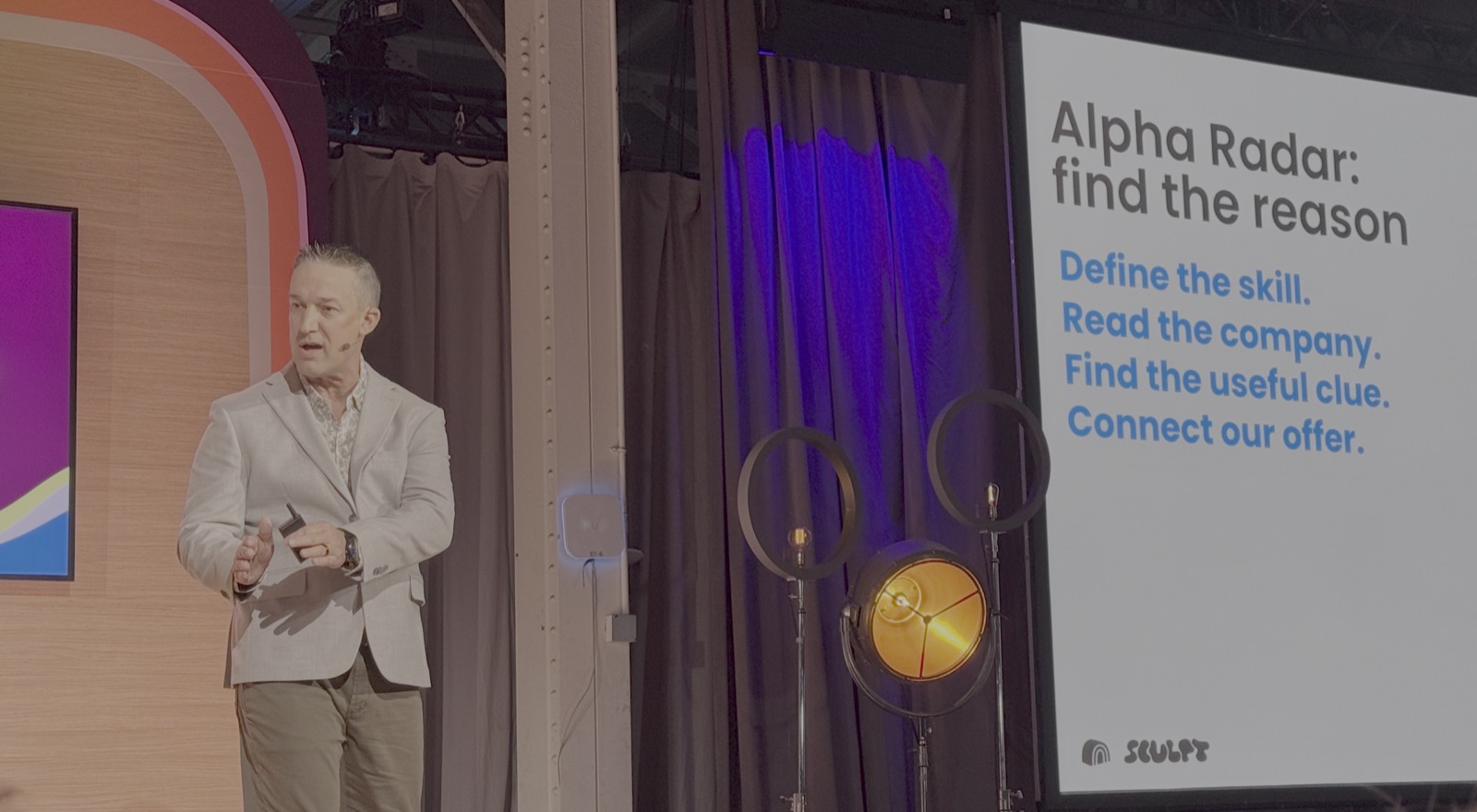
His framing:
“We are going to find companies that have a reason to talk.”
Whitfield also emphasized teaching agents your methods through skills and giving them memory, so operators do not have to repeat that knowledge with every prompt.
But “self-learning” needs a clear goal. Optimizing for replies can teach a system something different from optimizing for qualified opportunities and revenue.
Cybersecurity teams should define those outcomes, require evidence for signals, and control the technical claims agents can make.
Being able to build it doesn’t mean you should
Jonathan Krangel, Global Head of RevOps at SpaceXAI, described how a quick fix at Cursor became a maintenance burden.
With inbound leads pouring in, an engineer built a lead router in Clay over a weekend. It worked, but bypassed Salesforce. Leads stayed in Clay tables, leaving the team unable to report conversion rates by lead source.
Then new reps joined, territories shifted, and people took time off. Each change required more custom work. Repeated enrichments added cost.
“The cost very quickly shifted from the build, the building of the thing, to the maintenance.”
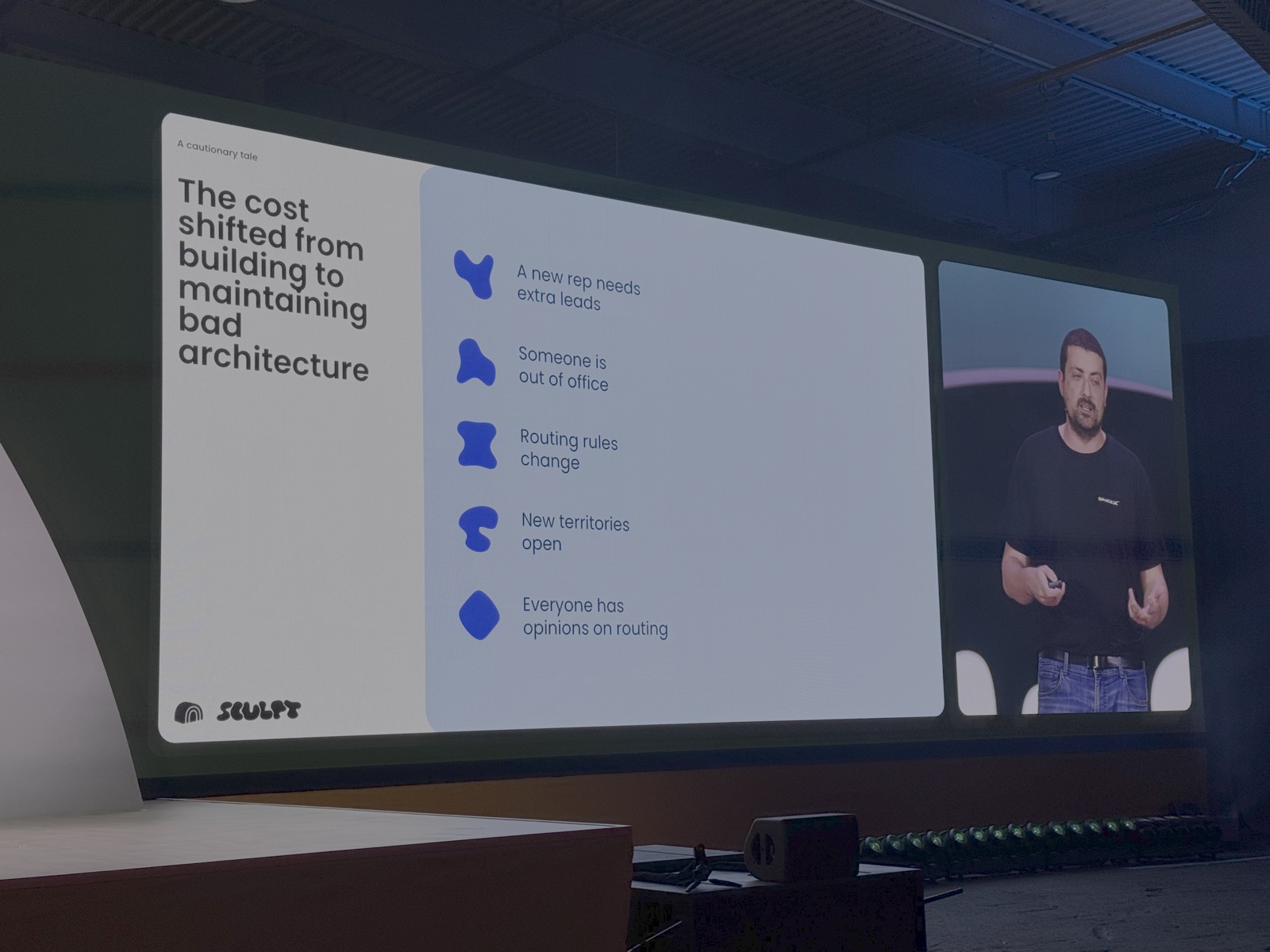
Krangel pointed to more than 250 AppExchange search results for “round robin.” His team was rebuilding functionality vendors had already solved.
The team put Salesforce back at the center, standardized enrichment through Clay, and bought existing tools for routine functions.
So, buy the round-robin router. Build the signals that tell you which accounts are worth routing.
Dream about the system you actually want
My favorite session was the closing fireside between Clay co-founder Varun Anand and Clay Bavor, Sierra co-founder and former head of Google Labs.
Bavor offered a useful principle:
“Solve before scale.”
Prove something works in a small setting, then make it bigger. That applies to agents, outbound, and buying experiences.
His closing advice was more ambitious. Software creation is now within reach of people who think in systems but lack a computer science background. He encouraged the audience to step away from their devices, take a walk, and imagine the best way their team could operate.
“I’d start with the assumption that there’s actually a path from here to there.”
Clay is making more of the tools available. Cybersecurity marketers can aim for a system that understands their market, earns buyers’ attention, coordinates the work, and learns from the results.
The opportunity is to imagine that system clearly enough to build it.